.png?w=3226&h=2980)
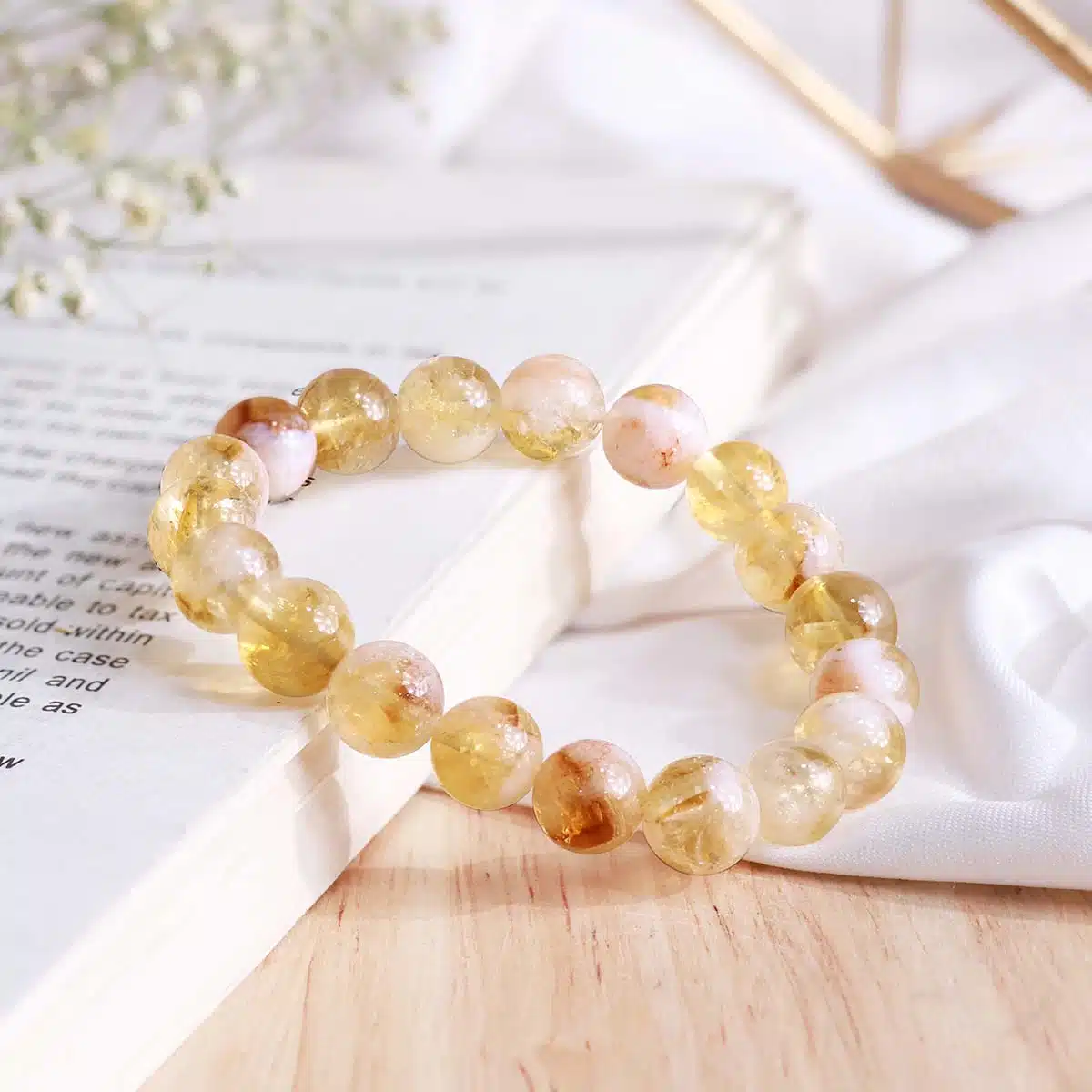
Citrine is treasured for its luminous yellow tones and the positive energy those hues are believed to convey. As Infinite Warrior, we love this golden gemstone because it brings sunshine into our collections and our lives. Below we explore what citrine is, why its color varies, and how it supports your intention setting practices. Along the way, you’ll find links to our favorite citrine bracelets and learning resources so you can explore deeper.
Understanding Citrine: Origins and Composition
Citrine is a variety of quartz (silicon dioxide) colored by tiny amounts of iron. Natural citrine forms when amethyst or smoky quartz deep within the Earth is naturally heated; this process turns violet amethyst into shades of yellow. Most citrine on the market today comes from Brazil, Madagascar, Russia and the U.S.. Because natural citrine is relatively rare, heat treated amethyst is often sold as citrine; these gems show deeper orange or red tones.
Natural vs. Heat Treated Citrine
The hue of citrine can help you distinguish natural stones from treated ones. Natural citrine tends to appear as a faint yellow orange tint. By contrast, bold amber or reddish shades often indicate a heat treated amethyst. When shopping for authentic stones, look for consistent color and smaller sizes high quality natural pieces over a few inches should command higher prices.
Our Citrine Bracelet | Honey + Gold Rings Crystal Bracelet is crafted from genuine citrine beads exhibiting the golden honey tones prized by collectors.